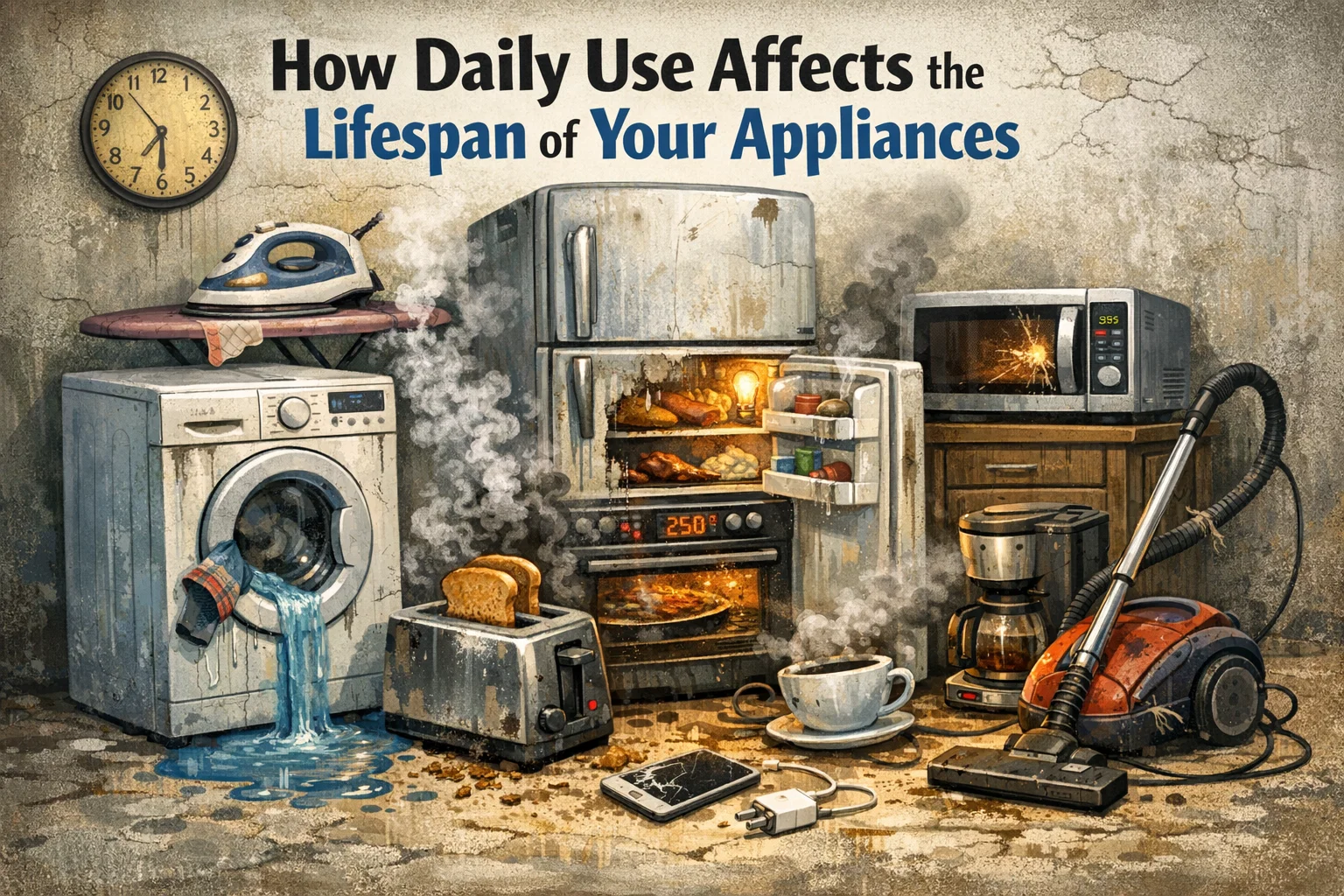
It’s easy to think appliances wear out because they’re old. In reality, the way they’re used every day plays a bigger role than most people expect. Over time, those small patterns of use quietly shape how long things last — and how often appliance repairs become unavoidable.
Wear doesn’t happen all at once
At first, everything works exactly as it should. No noise, no delay, no reason to think about how the appliance is handling the workload. Then, slowly, something shifts.
Not dramatically. Just slightly.
A cycle takes a bit longer. A sound appears that wasn’t there before. You might notice it once and forget about it. That’s usually how wear begins — not as a failure, but as a gradual change that blends into everyday use.
The important part is that this process is continuous. It doesn’t pause just because nothing has broken yet.
The difference between use and pressure
There’s a subtle line between normal use and constant strain. Most appliances are designed to handle regular activity, but they respond differently depending on how that activity is distributed.
For example, using something occasionally with heavier loads feels different than using it constantly without breaks. Both are “normal,” but the internal stress builds in different ways.
A few patterns tend to push appliances closer to their limits:
- running multiple cycles back-to-back without pause
- consistently loading beyond what feels comfortable
- ignoring small resistance or unusual behavior
None of these cause immediate problems. But over time, they create a kind of pressure that isn’t visible from the outside.
When routine becomes invisible
Daily habits are hard to notice because they feel natural. You don’t think about how often you open the fridge, how long a machine runs, or how quickly you move from one task to another.
And yet, that routine is exactly what defines the lifespan.
In real life, people rarely change how they use appliances unless something stops working. Until then, everything feels fine. Even when small signs appear, they’re easy to ignore because nothing forces you to act.
This is where appliance repairs often begin — not with a sudden breakdown, but with a long period of unnoticed repetition.
A shift that changes how things last
At some point, usually after dealing with a repair, the perspective changes. You start noticing the rhythm of use instead of just the result.
It’s not about being overly careful. It’s more about recognizing when something feels slightly off and giving it a moment of attention. Letting an appliance rest between cycles. Adjusting how much you load. Paying attention to how it sounds when it starts.
These aren’t big changes. But they alter how stress builds inside the system.
And once that awareness is there, it becomes part of how you use things without needing to think about it constantly.
Closing thought
Appliances don’t just age — they respond to how they’re used, day after day. And when you begin to notice that connection, dealing with appliance repairs feels less like reacting to failure and more like understanding how small daily choices quietly shape what happens over time.
Leave a Reply