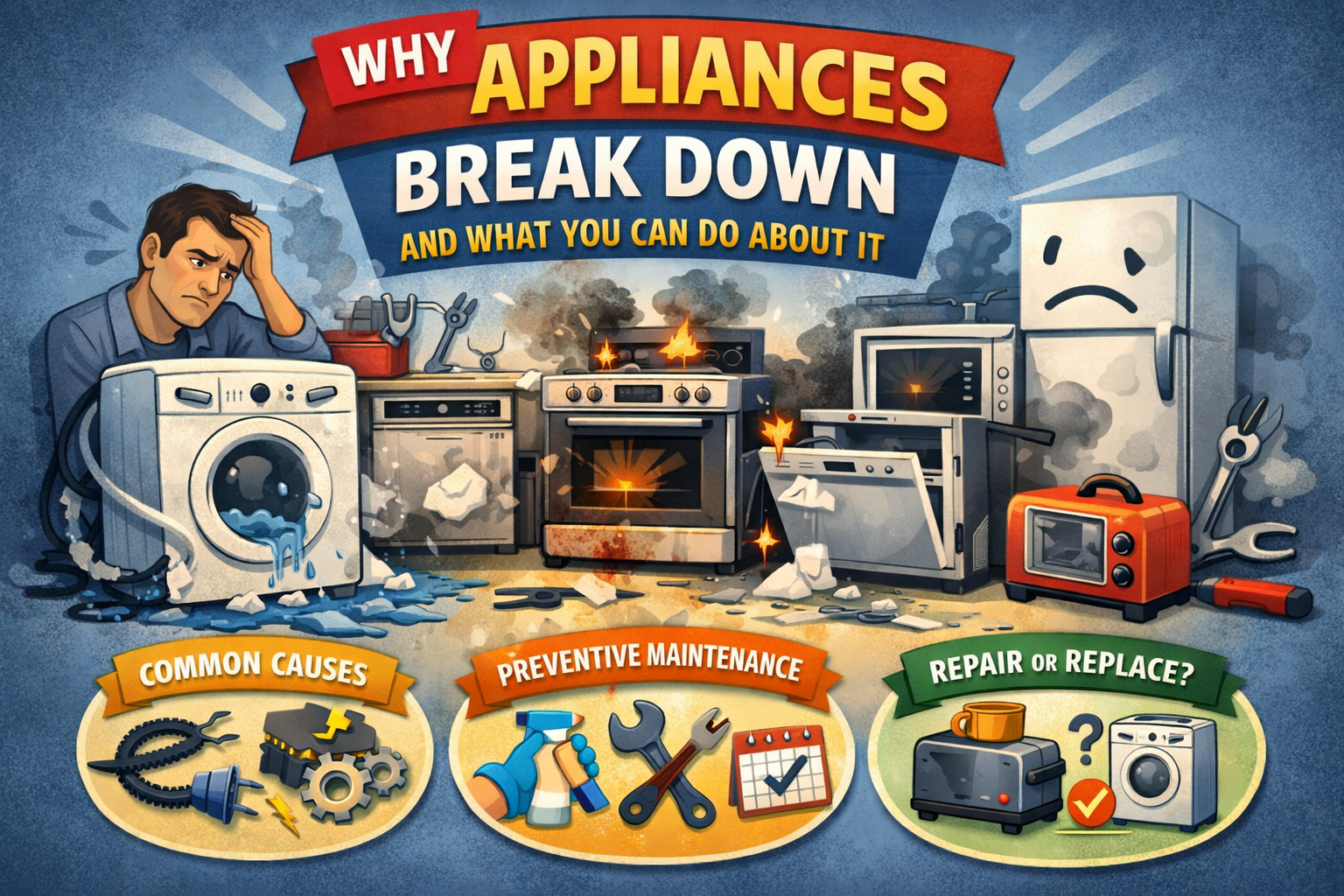
It never feels like it should happen. One day everything works, and the next something stops or starts acting strangely. But most of the time, breakdowns aren’t sudden at all — they build quietly, long before appliance repairs become necessary.
It’s rarely one thing that causes the problem
There’s a common idea that something “just breaks.” A part fails, and that’s it. In reality, it’s almost never that simple.
Appliances are systems. Multiple parts working together, adjusting constantly. When one element starts to drift — even slightly — the rest begin to compensate. Not enough to fail immediately, but enough to change how the whole system behaves.
That’s how most problems begin. Not with a clear fault, but with a small imbalance that keeps growing.
The difference between normal use and silent strain
Daily use feels harmless. You turn something on, it runs, you move on. But over time, the way an appliance is used starts to matter more than how often.
Two similar patterns can lead to very different outcomes:
- steady, moderate use with occasional pauses
- repeated cycles without giving the system time to settle
Both seem normal. But one allows internal parts to stabilize, while the other builds continuous pressure.
The tricky part is that this pressure doesn’t show up immediately. It accumulates quietly, until something inside can’t compensate anymore.
A moment most people don’t notice
There’s always a stage where the appliance is still working, just not quite the same. A sound changes. A cycle takes longer. Something feels slightly off.
That moment is easy to ignore.
You continue using it because nothing has actually stopped. And by the time it becomes obvious, the issue has already developed beyond that early stage.
This is where many appliance repairs come from — not from sudden failure, but from a period where the signs were present but didn’t demand attention.
What actually helps, even without fixing anything
Not every situation requires action right away. But there are small adjustments that can change how problems develop over time.
For example:
- noticing when something feels different instead of assuming it’s temporary
- avoiding pushing appliances beyond what feels natural for them
- giving systems time to reset between repeated use
These aren’t technical solutions. They don’t fix anything directly. But they reduce how quickly small issues turn into larger ones.
It’s less about control and more about awareness.
Closing thought
Appliances don’t break without a reason — they respond to how they’re used and how small changes evolve over time. And once you start recognizing those patterns, dealing with appliance repairs feels less like reacting to unexpected failures and more like understanding how those failures quietly begin.
Leave a Reply