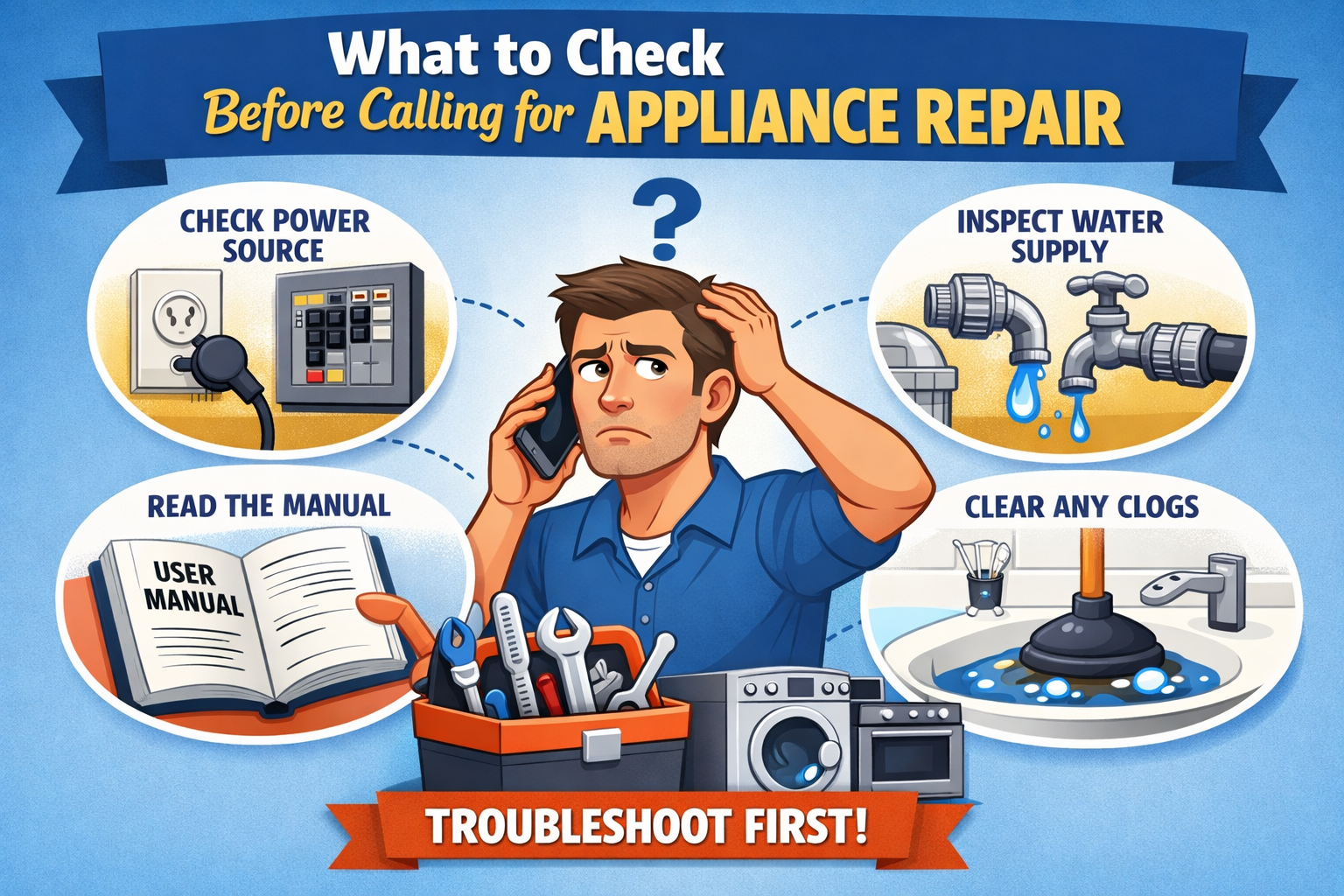
There’s usually a moment when something stops working the way it should, and the first instinct is to fix it immediately. But before jumping into appliance repairs, it’s often worth pausing for a minute — not to solve the problem, but to understand what’s actually happening.
The difference between a failure and a situation
At first, everything feels like a breakdown. The appliance doesn’t respond, or it behaves in a way you didn’t expect. It’s easy to assume something serious has gone wrong.
But not every issue is a failure. Sometimes it’s a situation — something temporary, something caused by how the appliance is being used at that moment.
A door not fully closed. A setting slightly off. A cycle interrupted earlier without noticing. These things don’t feel important, but they can completely change how the appliance reacts.
The tricky part is that the result looks the same: it’s not working. But the cause might be much simpler than it seems.
What feels obvious, but often gets skipped
There are a few basic things people tend to overlook, not because they’re complicated, but because they feel too simple to matter.
For example:
- whether the appliance is actually receiving power consistently
- if controls or settings have changed without noticing
- whether anything is physically blocking normal operation
None of these require technical knowledge. Still, they’re easy to miss when your attention is already focused on the idea of a problem.
Taking a minute to go through these details doesn’t always solve the issue. But when it does, it saves more than time — it removes unnecessary confusion.
A situation that happens more often than expected
Imagine turning something on and getting no response. You try again. Nothing changes. At that point, it already feels like something is broken.
But later, you realize it was something small. A setting that didn’t register properly. A connection that wasn’t fully secure. Something that didn’t look like the cause at all.
This kind of situation is more common than people think. Not because appliances are unreliable, but because small inconsistencies can interrupt the process in ways that aren’t immediately obvious.
And once the idea of a breakdown takes hold, it becomes harder to see those smaller possibilities.
When attention changes the outcome
After dealing with a few issues like this, something shifts. You don’t react as quickly. Not out of hesitation, but because you’ve seen how often small details play a role.
You begin to notice patterns. What usually goes wrong. What tends to look worse than it actually is. And where it makes sense to pause before assuming the worst.
That doesn’t mean ignoring real problems. It just means giving yourself enough clarity before stepping into appliance repairs — so that the decision is based on what’s actually happening, not just how it feels in the moment.
Closing thought
Not every problem needs immediate action. Sometimes it needs a closer look first. And once you get used to that pause, dealing with appliance repairs becomes less about reacting quickly and more about understanding what’s really going on before deciding what to do next.
Leave a Reply